
Cadena de valor de las baterías
La demanda de baterías está creciendo rápidamente debido a la transición mundial hacia las energías renovables y los vehículos eléctricos (VE). Según la Agencia Internacional de la Energía (AIE), las baterías son fundamentales para cumplir los compromisos adquiridos por casi 200 países de triplicar la capacidad mundial de energía renovable para 2030. Además, se prevé que la demanda de baterías para vehículos eléctricos se multiplique por siete de aquí a 2030.
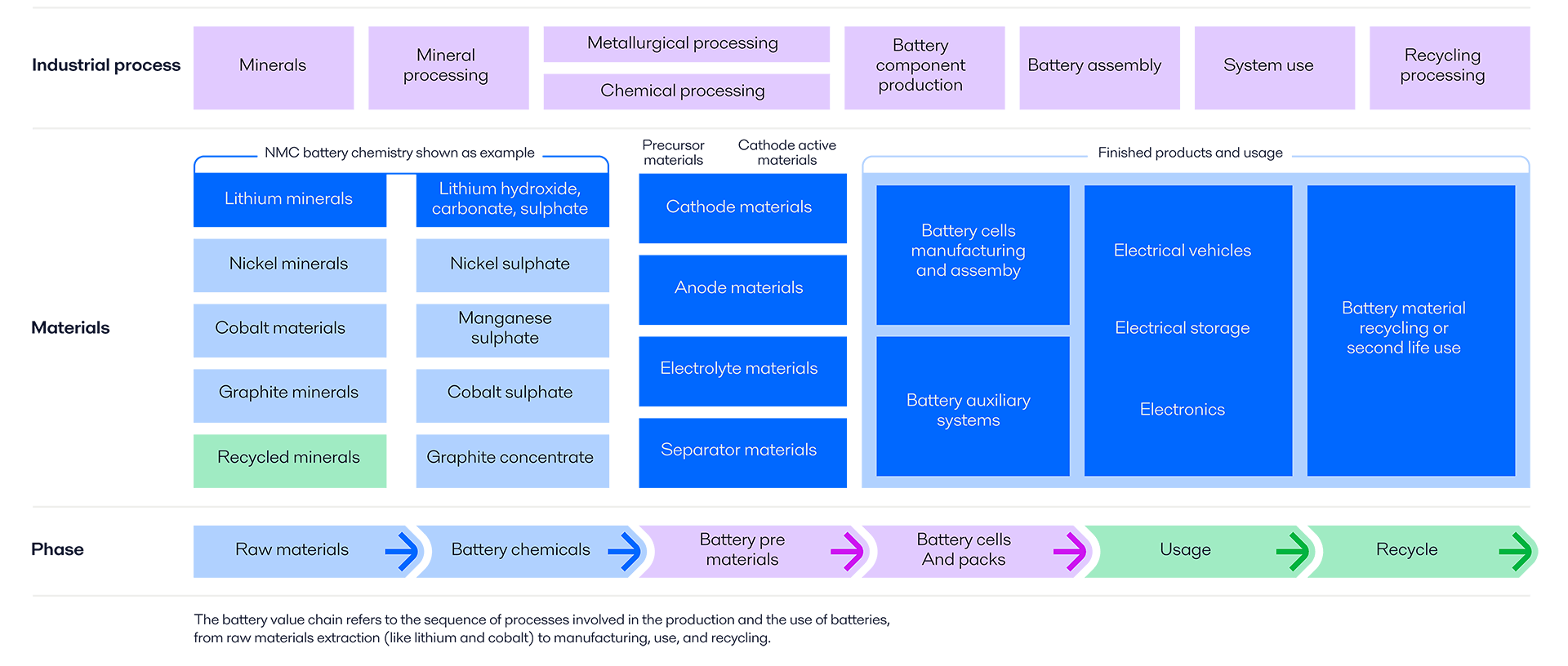
La cadena de valor de las baterías implica la transformación de materias primas como el litio y el cobalto en materiales aptos para baterías, seguida de la producción de materiales activos para cátodos (CAM) que se utilizan en las celdas de las baterías. A continuación, estas celdas se ensamblan en paquetes de baterías para vehículos eléctricos y sistemas de almacenamiento de energía. Al final de su vida útil, las baterías se recogen y pueden reciclarse para recuperar materiales valiosos que se reutilizan, lo que garantiza un suministro sostenible de materiales críticos. La innovación continua en cada etapa es esencial para mejorar la eficiencia y reducir el impacto medioambiental.
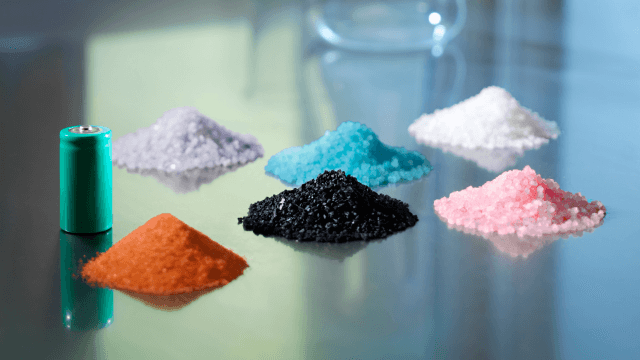
Una cadena de valor circular de las baterías depende del reciclaje, que es posible gracias a tecnologías probadas
Desde hace más de un siglo, Alfa Laval ofrece soluciones que ayudan a recuperar materiales valiosos, concentrar sales metálicas, optimizar el consumo energético y reciclar el agua de proceso. Hoy en día, estas soluciones están preparadas para garantizar que las baterías del futuro puedan funcionar gracias a las que utilizamos hoy. ¡Mira el vídeo para saber más!
Resumen del proceso
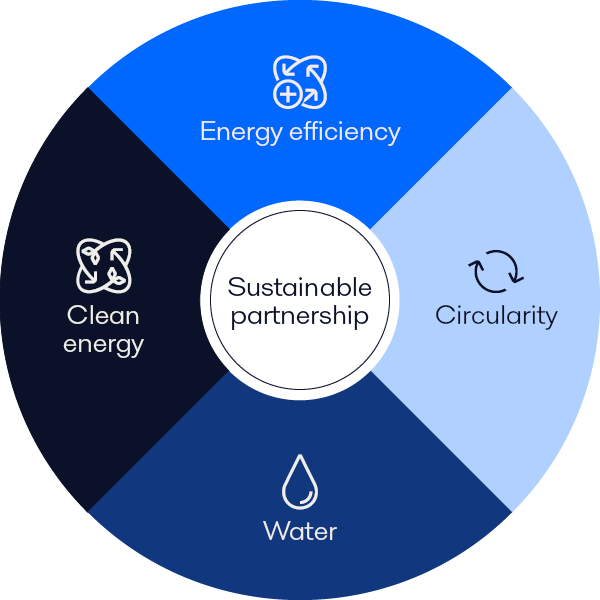
Eficiencia energética
Economía circular
Asociación sostenible
space
Acelerando la circularidad en toda la cadena de valor de las baterías
Las tecnologías de transferencia de calor y separación de Alfa Laval pueden utilizarse en toda la cadena de valor de las baterías. Estas tecnologías aceleran la circularidad en los procesos de refinación, producción y reciclaje. La amplia oferta de decantadores centrífugos, separadores de discos, sistemas de evaporación e intercambiadores de calor actúa como una valiosa caja de herramientas para una verdadera mejora de los procesos.
A continuación se presenta una visión general de los diferentes segmentos de la cadena de valor de las baterías donde encontrará las soluciones líderes de la industria de Alfa Laval, las cuales ayudan a crear procesos más sostenibles.
Refinación de minerales
Producción de baterías y material activo
La Agencia Internacional de la Energía (AIE) proyecta que la demanda global de baterías de iones de litio podría alcanzar hasta los 4,000 GWh para el año 2040. Este crecimiento está impulsado por políticas gubernamentales que promueven la sostenibilidad, avances en la tecnología de baterías y la creciente asequibilidad de los vehículos eléctricos. Además, la necesidad de soluciones eficientes de almacenamiento de energía para equilibrar la naturaleza intermitente de las fuentes de energía renovables, como la solar y la eólica, impulsa aún más la demanda de estas baterías.
Para satisfacer esta creciente demanda, existe una necesidad urgente de químicas de batería y procesos de producción más eficientes. Además, es esencial optimizar los procesos de fabricación para aumentar la eficiencia y reducir el impacto ambiental.
Reciclaje de baterías
El aumento en la demanda de baterías de iones de litio genera preocupaciones sobre la sostenibilidad y la disponibilidad de minerales críticos como el litio, el cobalto y el níquel. El reciclaje de baterías ayuda a mitigar el impacto ambiental de la minería y reduce la dependencia de recursos naturales finitos.
Al recuperar materiales valiosos de las baterías usadas, el reciclaje apoya una economía circular y garantiza una cadena de suministro más sostenible para la producción futura de baterías. Además, el reciclaje de baterías de iones de litio desempeña un papel crucial en la reducción de las emisiones de gases de efecto invernadero asociadas con la producción de baterías.
La AIE señala que el reciclaje puede disminuir significativamente la demanda de minerales críticos primarios, reduciendo potencialmente la demanda de litio y níquel en un 25% y la de cobalto en un 40% para el año 2050.