
Aceite de oliva - Serie X
Tanto para la producción en dos fases o en tres fases, la serie X de centrífugas decantadoras Alfa Laval para aceite de oliva está diseñada para proporcionar un funcionamiento rentable en toda la cadena de producción de aceite de oliva: clarificación, extracción, deshidratación y clasificación en primera y segunda extracción.
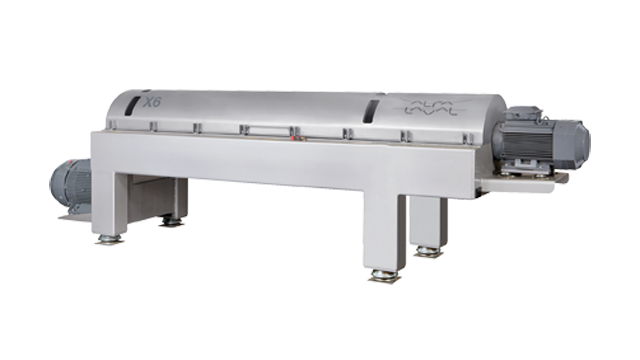
Design features and benefits
The decanters feature a special system called Variable Dynamic Pressure (VDP). The geometry of the bowl and conveyor allows for a high pressure to be made on the solids before the discharge, thus being able to reach a higher level of dryness. Through the electronic control of the conveyor speed (differential speed) the level of this pressure can be adjusted and set to obtain the required degree of dryness.
Two-phase and three-phase
It is possible to use the same decanter for both two-phase and three-phase operation, on the basis of the differences in specific gravity.
In the three phase operation, the special features of the bowl geometry allow to utilize the so called ARA system. The ARA system controls the specific regulation of the decanter liquid level that both optimize quality of oil and water consumption.
The higher clarity of oil separated through the three phase process can be obtained with the addition of a lower amount of dilution water. This ensures a higher oil quality and reduced fresh water consumption. For the same reason, AISI 316 stainless steel is used throughout, and the casings are also made of stainless steel.
The design includes hinged casings for easy opening, maintenance and cleaning.
The decanters also have an overload protection system in either electronic or mechanical release version.
Cómo funciona
Principios de funcionamiento
El diseño de la centrífuga decantadora garantiza la separación de la pasta de aceitunas entrante en tres fases: aceite, sólidos y agua.
La pasta de aceitunas se introduce en el recipiente a través de un tubo de entrada fijo y, a continuación, se acelera suavemente mediante un rotor de entrada.
La separación se lleva a cabo en un recipiente cilíndrico horizontal equipado con un transportador de tornillo. La fuerza centrífuga provoca la sedimentación instantánea de los sólidos en la pared del recipiente.
El transportador gira en la misma dirección que el tambor, pero a una velocidad diferente, y transporta los sólidos hacia el extremo cónico. Al ser más ligero, el aceite fluye hacia el interior y los sólidos se desplazan hacia el perímetro exterior, mientras que el agua permanece en el centro. La separación se produce a lo largo de toda la longitud de la parte cilíndrica del tambor.
Las dos fases líquidas pasan a sus respectivas salidas a través de un filtro vibratorio y luego se descargan en tanques de recolección.